Drawn from Dr. Manoj Sharma, Sirmaur Janpad ke Lok Devta Bhurishring/Bhureshwar Mahadev (Nandi Prakashan, 2023), temple archives, and revenue records of the former Sirmour riyasat.

Pre-1767 regalia · Pujarli

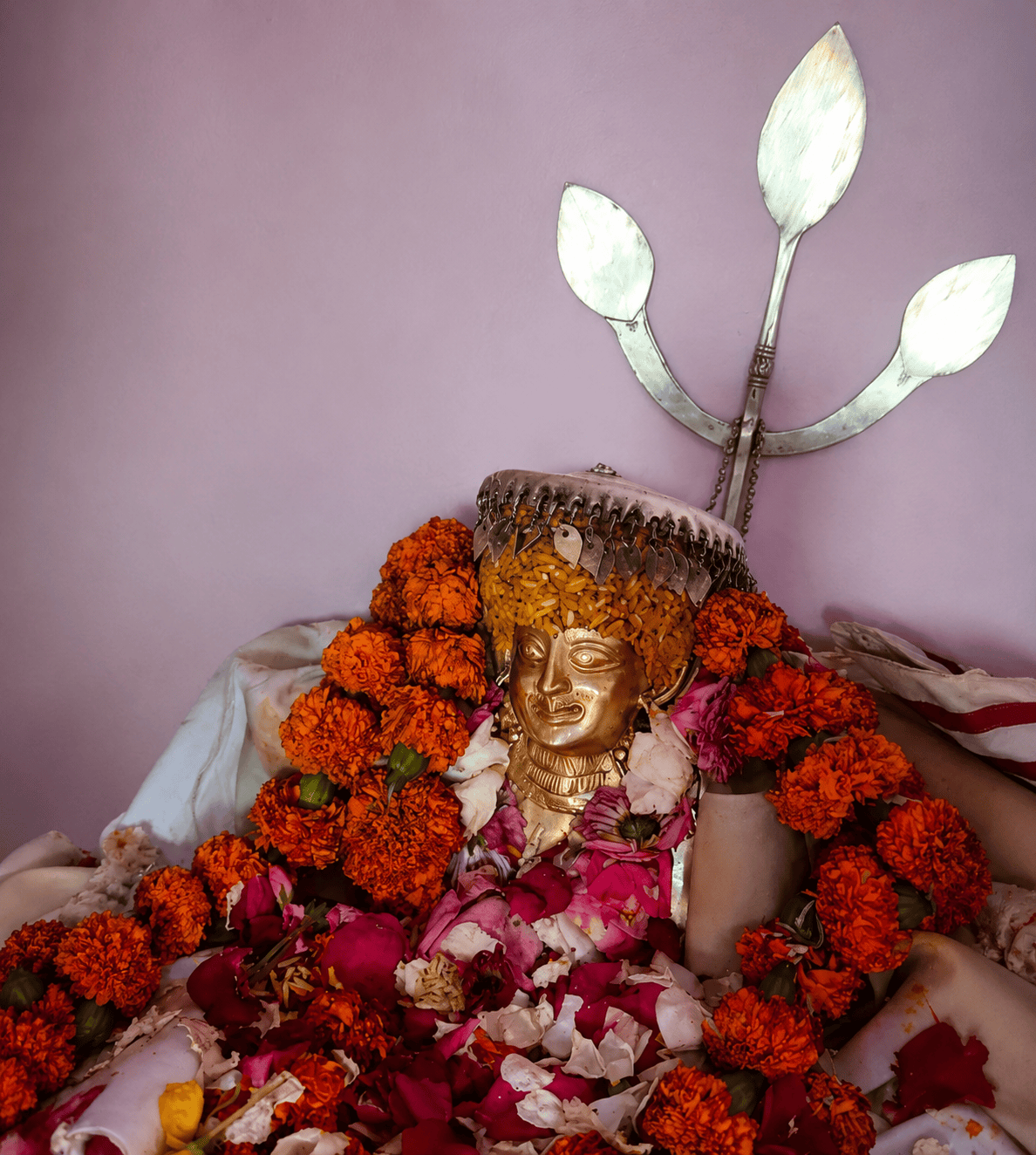
Silver trishul, chhatra & chanvar

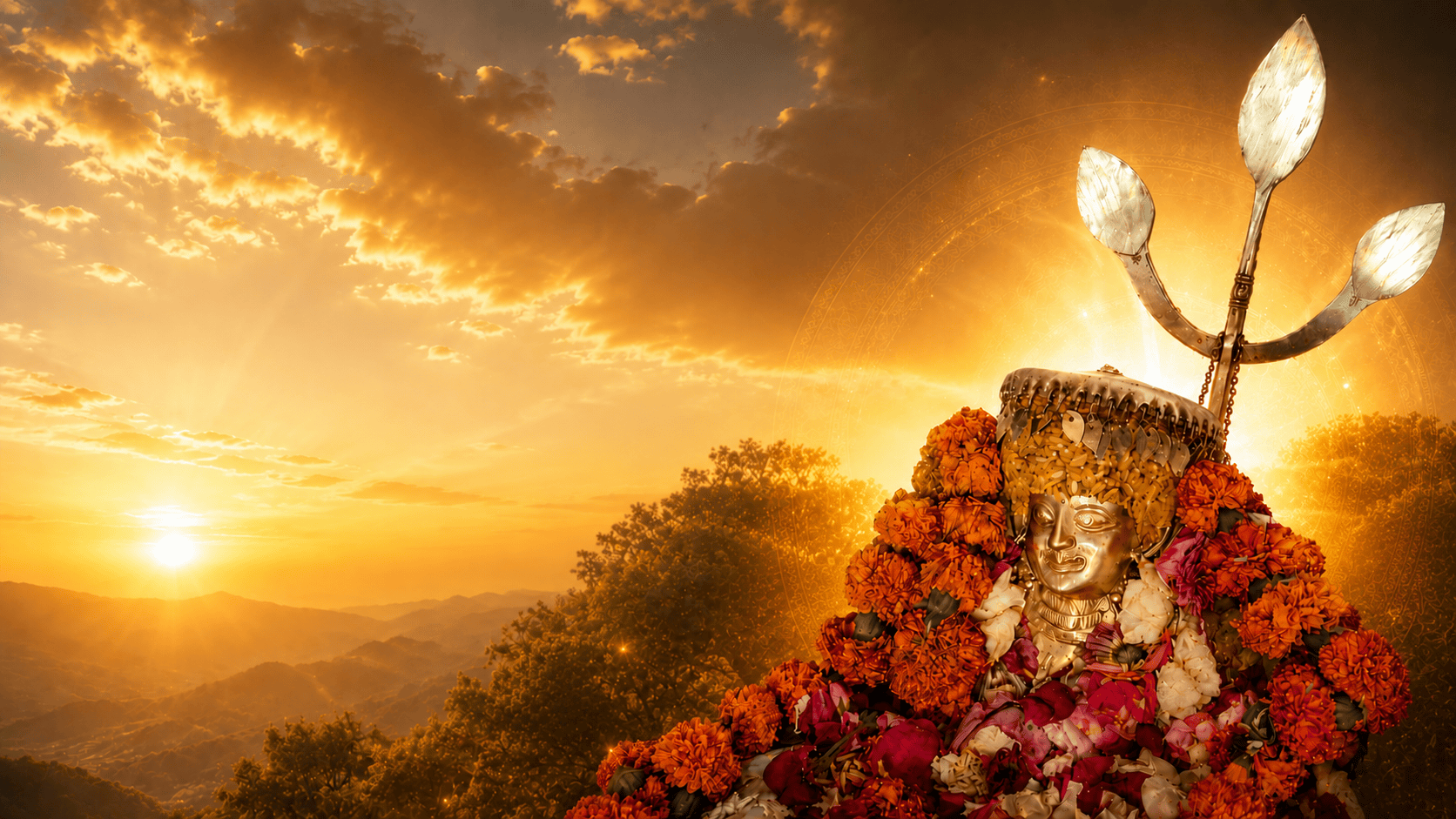
The book’s early photo plates show the deity’s ancient umbrella whisk, silver trishul, and related regalia preserved in the priestly home. These are not replicas: they are the objects Muafidar Padha Ram evacuated when Gorkha forces looted gold and silver murtis and a silver palki from Kwagdhar in 1767.

Alongside the trishul and chhatra, nagada, dhol, and other festival instruments were saved—items without which public worship cannot begin. When the priest wears the devta’s dress today, he carries the same visual language elders describe from nineteenth-century witness statements reproduced in the volume.

For the Heritage Committee, these pieces are touchstones of authenticity. They connect living possession ritual to a documented crisis of invasion and survival, proving that Bhureshwar’s tradition persisted not only in story but in metal, cloth, and drum-skin carried down the mountain to Pujarli.
Silver trishul, chhatra & chanvar
Hill cave shrine

Swayambhu Bhu Linga, Kwagdhar

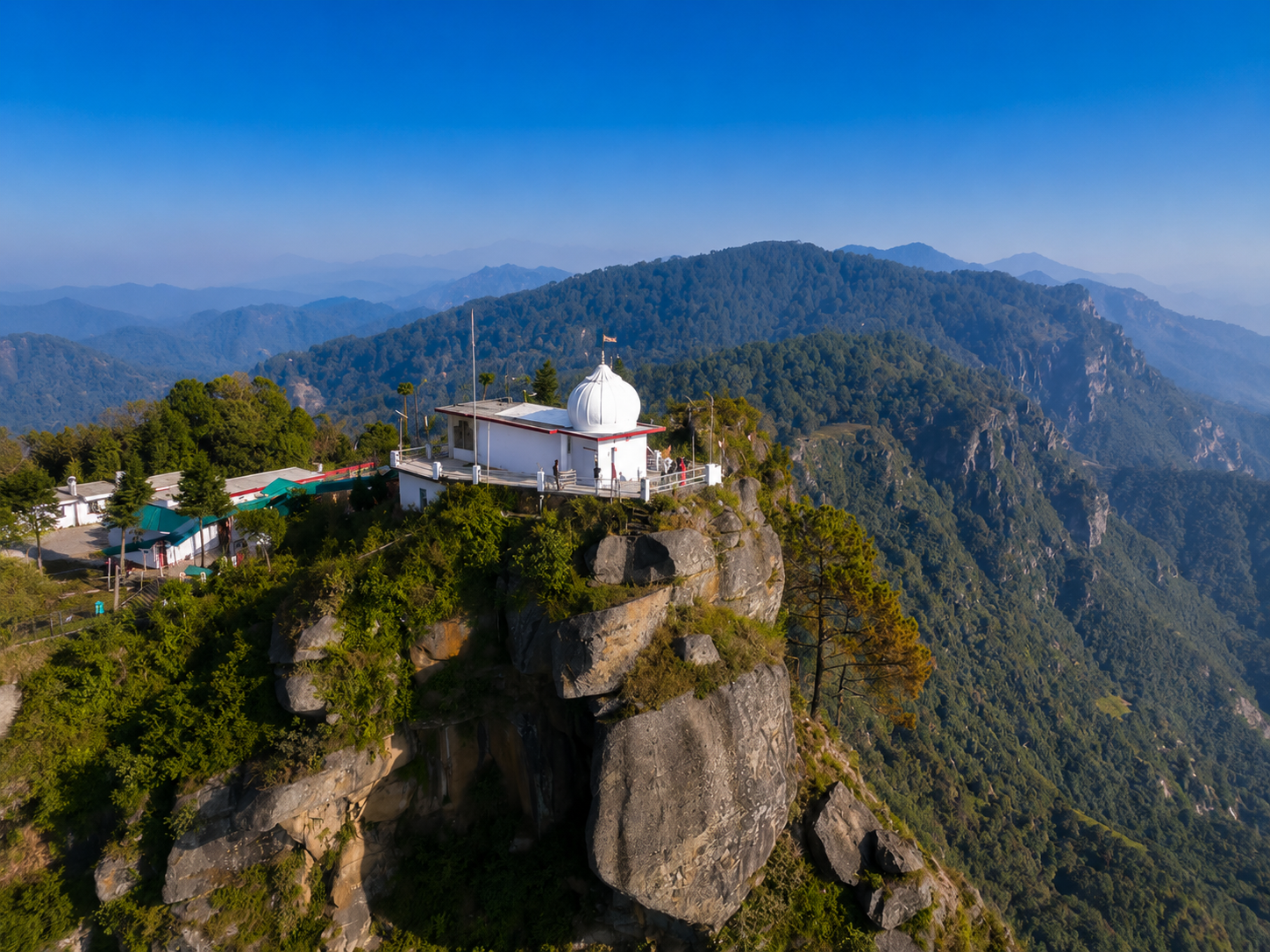
Temple katha and the book’s folklore chapter place the sanctum inside the mountain: a swayambhu linga roughly twenty-five feet within cave-like rock on Kwagdhar, honoured as Shiva’s illuminated shadow-form during the Mahabharata war.

Unlike portable murtis, the Bhu Linga cannot be carried to Pujarli when snow closes the pass—the deity’s essence moves in the priest instead. All abhishek, festival milk, and daily puja ultimately refer back to this stone, whether performed on the heights or at the Pujasthali below.

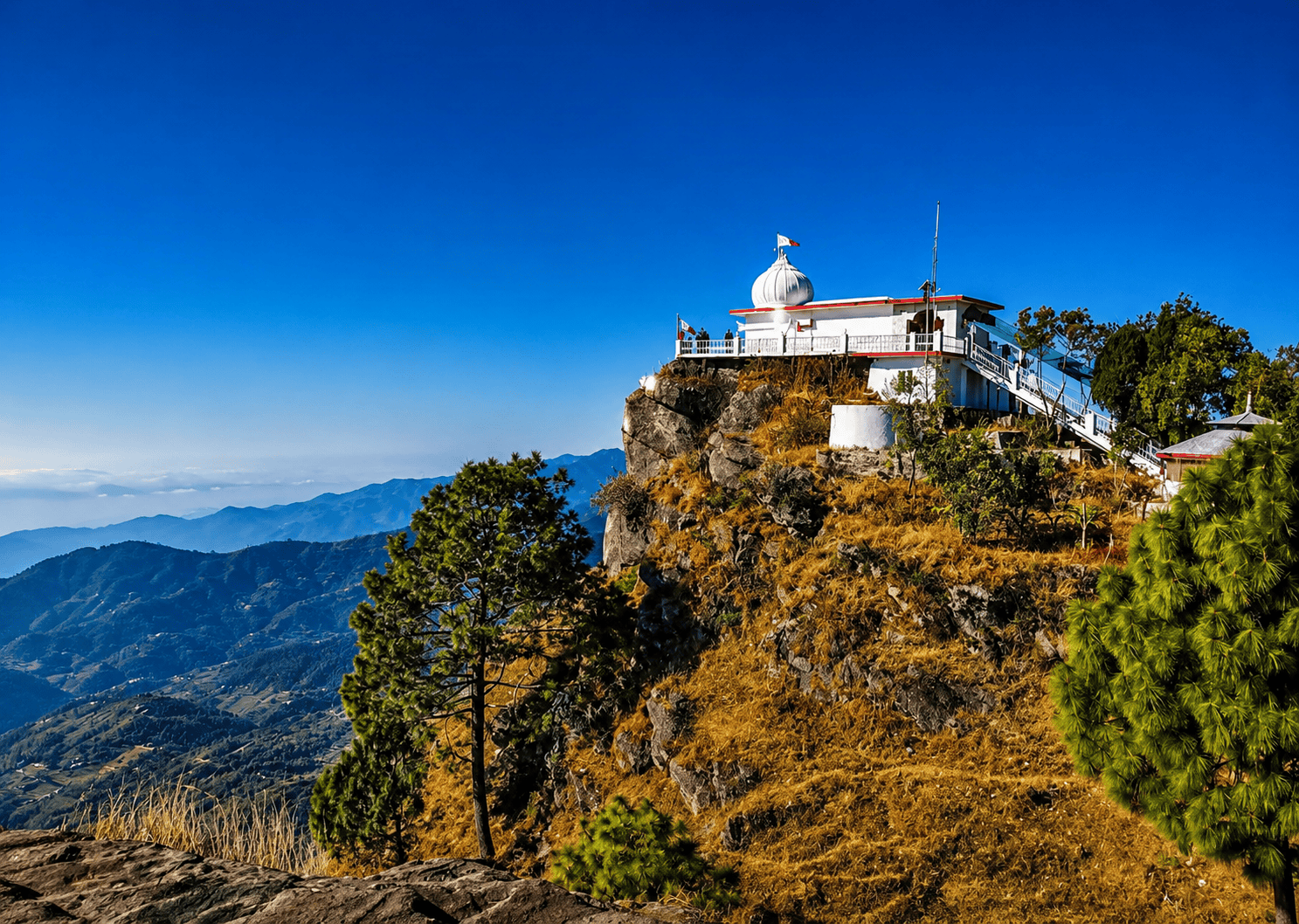
Architectural photos in the volume show the present mandir dome and approach, but the linga itself remains the oldest artifact of all: geological, devotional, and tied to Ṛgvedic remembrance of bhūriśṛṅgā that the book links to this Sirmaur landscape.

Swayambhu Bhu Linga, Kwagdhar
19 Āṣāṛh VS 1989

Sirmour State sanad (VS 1989)

A full-page reproduction in the book presents the Sirmour State sanad issued under Collector B.L. Kichloo on 19 Āṣāṛh Vikram Samvat 1989 regarding Mandir Devta Bhureshwar and the Pujarli priest in Tehsil Pachhad.

The document confirms the shrine’s protected status, the Mohatmim/Muafidar line, and customary rights to dhoop-deep and puja maintenance—written proof that complements older oral and misl record. For historians it bridges princely-state administration and the living priesthood under Dr. Manoj Sharma’s 2006 collector appointment generation.

The committee treats this sanad as a primary artifact: ink, seal, and official Urdu-Hindi script on aged paper. Digital scans on this website are offered so researchers and devotees can verify claims without handling the fragile original.

Sirmour State sanad (VS 1989)
1876–77 · revenue record

Misl Hakiyat & Fehrist Muafiyat

Misl Hakiyat for Moja Kathad (Khasra 1017) documents the temple on its hill land and describes the reconstruction when walls and roof collapsed—work overseen by Padharam Muafidar across forty-five years of uninterrupted kar.

Fehrist Muafiyat lists and related revenue papers name Mandir Bhureshwar within Panwa Bhoj Dharti Bajiri alongside villages such as Tikkari Pujarli and Kathad. The ₹12 annual muafi granted under Sirmour riyasat patronage is a recurring figure in the book’s historical chapters.

Together these records show the devta as a land-holding sacred institution under colonial-era administration—not merely a forest shrine. They are essential artifacts for anyone vetting temple history against government archives.

Misl Hakiyat & Fehrist Muafiyat
Polia family archive

Priestly bahi & written registers

The Polia parivar maintains bahi—traditional ledgers—recording appointments, festivals, donations, and disputes. Bhuriyaram ji’s tenure (1922–1956) is documented both in family books and in British-era orders copied into the archive.

The book quotes grandson Pt. Keshavanand Sharma on Bhuriyaram’s first midnight leap onto Shila Vishesh in 1922 when the deity’s shadow entered him—an event also tied to written succession evidence used in the 1956 court dispute.

As an artifact class, the bahi are as important as metal regalia: they prove continuity of names, dates, and duties across generations when official records are incomplete. The committee is digitising selected pages for safe public access.

Priestly bahi & written registers
28 Dec 1959

DC order appointing Tulsiram (1959)

Reproduced in the book, the typed order dated 28 December 1959 appoints Shri Tulsi Ram, son of the late Bhuria, as manager (Mohatmim) of Temple Bhoor-Singh in place of the deceased incumbent, directing Tehsil Pachhad to update revenue records.

This document closes the contested succession after Harisaran’s 1956 suit failed for lack of hereditary proof. It is a modern artifact linking independent India’s district administration to the same Mohatmim office named in princely sanads.

For legal historians the order is short but decisive; for devotees it confirms the Polia line endorsed by the state after public dispute—a paper trail as sacred to governance as the silver trishul is to ritual.

DC order appointing Tulsiram (1959)
Kwagdhar path

Seven sacred stones on the ascent

When the deity was established at Pujarli c. 1768, milk was poured at seven stations along the route, with remembrance of great Himalayan tirthas, before the eighth stream at the mandir door. Those stations became permanent markers on the pilgrim path.

The stones are not ornate sculptures; they are landscape artifacts—worn, familiar, known to every kardar who walks ahead of the priest. Each Dev Utsav the same sequence repeats: pause, pour, proceed, until the community sees the devta arrive at Kwagdhar.

Trekkers today can ask local guides to identify the sequence. The committee documents GPS references and photographs so the milk path remains traceable even as forest cover changes.

Seven sacred stones on the ascent
Festival instruments

Nagada, dhol & silver tumbadi

The book’s photo captions name nagada and dhol among regalia evacuated to Pujarli. Without their sound, devotees do not approach the deity—a rule that separates Bhureshwar from quieter shrines.

Silver tumbadi vessels appear in bathing and festival scenes, holding milk and offerings during Dev Snan and public exchanges on Dev Shila. They are practical objects elevated by continuous use; dents and polish mark decades of hands.

Instrument care falls to designated kardars and the priestly family. When the committee speaks of “living artifacts,” these are the examples meant: still played, still required, still heard on the mountain before anyone says “Namah Shivaya.”

Nagada, dhol & silver tumbadi
c. 1940 · priestly seat

Dev Shila & Pujasthali Pujarli

Photographs show the white Pujasthali structure completed around 1940 by Bhuriyaram Muafidar—permanent worship quarters when the devta cannot remain on snow-bound Kwagdhar.

Behind and beside it lies Dev Shila, the rock of noon milk exchange and midnight leap. The Sheshnag overnight fire that produces Chhu ash is lit in this compound, tying architecture and geology into one ritual geography.

Visitors to Pujarli should treat the seat and stone as paired artifacts: one built by a named Mohatmim, the other claimed by tradition as the devta’s footing since epic time. Together they explain why the village—not only the mountain—is called a place of power.

Dev Shila & Pujasthali Pujarli
Misl era reconstruction

Stone jalhari from the 1876 rebuild

The 1876–77 Misl Hakiyat entry describes temple walls and roof giving way and a renewal in which a new stone jalhari was fashioned around the linga under Padharam’s forty-five-year Mohatmim tenure.

The jalhari is the architectural embrace of the god—stone cradling stone. Its reconstruction marks a visible layer in the shrine’s physical history, comparable to the 1815 rebuild under Fateh Sarkar and later dome work remembered by kardars in the twentieth century.

Archaeologically modest but ritually central, the jalhari reminds visitors that Bhureshwar’s “ancient” status is maintained through repeated repair, not frozen ruin. Each rebuild is documented in paper or family memory—another class of artifact alongside the linga itself.

Stone jalhari from the 1876 rebuild

Location

Bhureshwar Mahadev Temple, Kwagdhar, Sirmaur, H.P.

Temple Timings

Temple Open at Sunrise till Sunset

Photography

Photography allowed in designated areas only.

Visitor Guidelines

Please maintain silence and respect the sanctity of the place.